I am part of a generation where manners were as crucial as the message itself. Growing up, we were taught to say “please” and “thank you,” to address people respectfully, and to consider the impact of our words. These practices were not mere formalities but fundamental aspects of communication that conveyed respect and empathy. Even when I ask ChatGPT for assistance, I instinctively include polite phrases, as it feels unnatural to do otherwise. Today, I find it challenging to communicate without these ingrained habits.

In today’s fast-paced business environment, communication is transforming before our eyes. The rise of short messaging services and social media has revolutionized how we interact, often reducing our conversations to brief, functional exchanges. While this efficiency has its benefits, it often comes at the cost of kindness and empathy. The words we use have grown shorter, our expressions more clipped, and our interactions increasingly devoid of the warmth and consideration that once marked professional communication. This shift has brought with it a peculiar phenomenon: the liability of kindness.
In the corporate world, kindness can sometimes be misinterpreted as a sign of weakness. Those who continue to be kind and empathetic may find themselves taken advantage of or even treated rudely. For instance, consider a manager who always responds to emails with a friendly greeting and a courteous closing. Over time, this manager might be perceived as overly accommodating, leading others to pile tasks onto them or dismiss their polite requests. This situation is not uncommon; the expectation for immediate, no-nonsense communication often overshadows the value of maintaining a respectful tone.
Moreover, the anonymity and impersonality of digital communication can exacerbate this issue. Behind the safety of a screen, individuals may feel emboldened to act in ways they wouldn’t face-to-face. A professional who consistently responds with kindness might find themselves the target of rude or demanding messages. In such scenarios, the empathetic individual faces a dilemma: maintain their courteous demeanor and risk further mistreatment, or adopt a more curt and defensive stance to protect themselves.
Despite the challenges, kindness should not be viewed as a liability. Instead, it can be a powerful tool for fostering genuine connections and promoting positive interactions. Kindness can defuse tension, build trust, and encourage reciprocity. For example, a customer service representative who handles a complaint with patience and empathy is likely to leave a lasting positive impression on the customer, even if the issue was not resolved perfectly.
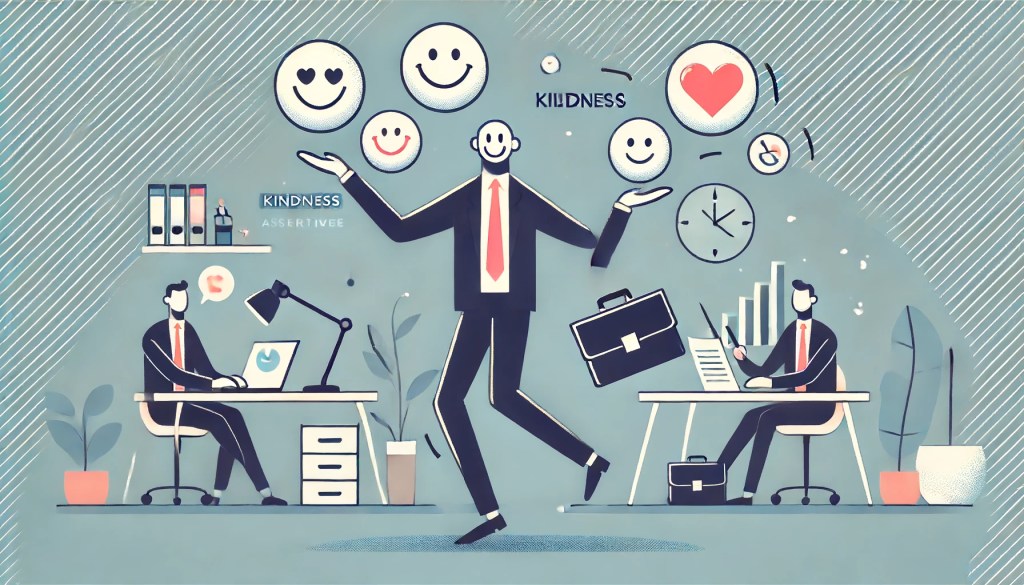
For managers, entrepreneurs, and corporate professionals, the key is to balance kindness with assertiveness. It’s important to set boundaries and communicate them clearly. Being kind doesn’t mean allowing others to take advantage of you. It means treating others with respect while also respecting yourself. Here are some practical strategies:
- Set Clear Expectations: When delegating tasks or setting deadlines, be clear about your expectations. Use kind language but be firm about what is required.
- Establish Boundaries: Politely but firmly communicate your boundaries. For instance, if you receive emails outside of working hours, respond during business hours with a note about your availability.
- Practice Active Listening: Show empathy by actively listening to colleagues and clients. Acknowledge their concerns and respond thoughtfully, balancing understanding with practical solutions.
- Provide Constructive Feedback: When offering feedback, combine kindness with clarity. Highlight positive aspects before addressing areas for improvement, ensuring your message is both respectful and effective.
- Model Respectful Communication: Lead by example. Demonstrate how to communicate respectfully and encourage your team to do the same. This can create a culture of kindness and mutual respect within your organization.
While the modern landscape of communication presents challenges for maintaining kindness, it is by no means impossible or undesirable. Kindness is not a weakness; it is a strength that, when balanced with assertiveness, can enhance our interactions and relationships. As we navigate this evolving digital world, let’s strive to keep kindness and empathy at the forefront of our communication, recognizing their enduring value even in the shortest of messages.
 Furkan A. Gur, PhD
Leave a comment